
Professional teeth whitening, explained
Whiter teeth are the most-requested cosmetic change we see — and, done properly, one of the safest and most cost-effective. Here is how professional whitening actually works, what to expect, and how we keep it comfortable.
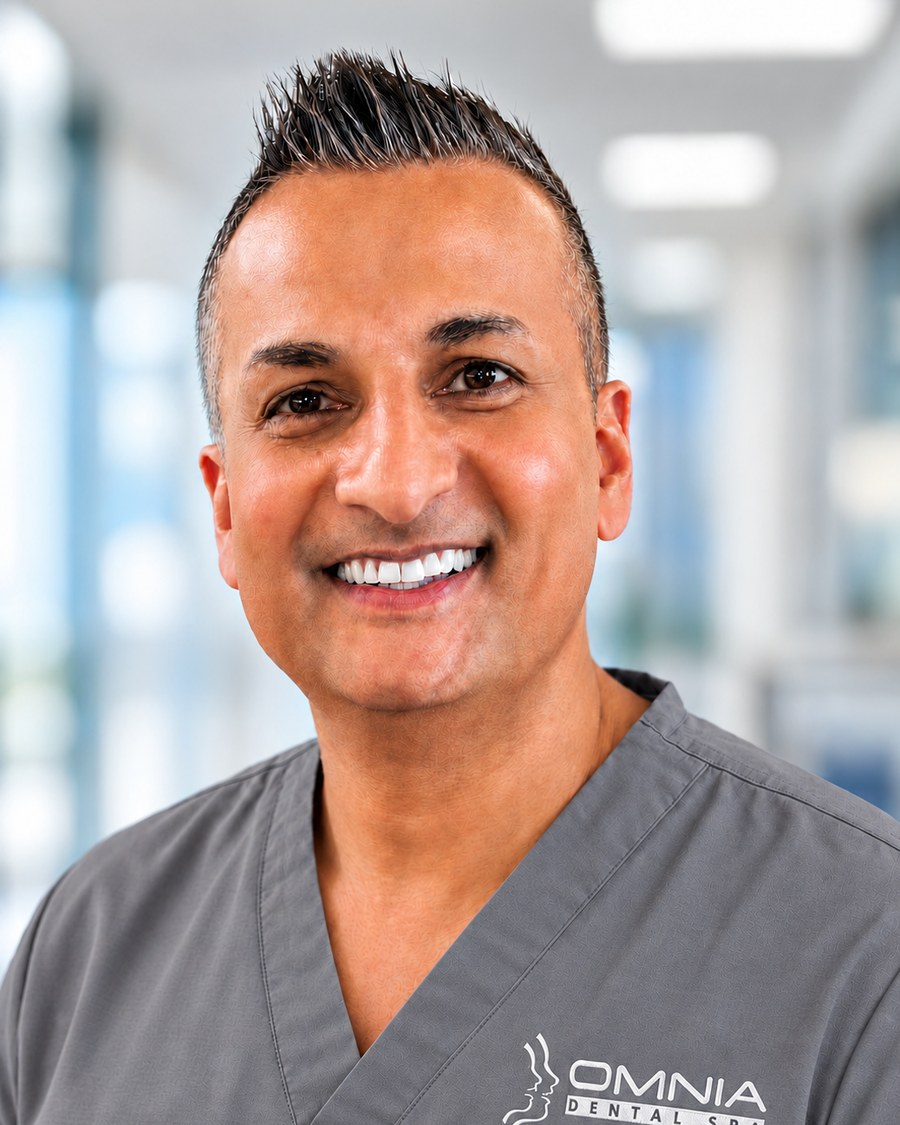 By Dr Tirj Gidda · Principal Dentist, Omnia Dental Spa
Updated October 2026 · 6 min read
Written by Dr Tirj Gidda, Principal Dentist at Omnia Dental SpaAdapted for Clear Braces SolihullOctober 2026
Why teeth darken
Enamel picks up coloured stains over the years from tea, coffee, red wine, curry and tobacco, while the dentine beneath naturally yellows with age. Some teeth darken after trauma or root-canal treatment — those need a different approach, which we can also provide.

Whitening is a dental treatment, by law
In the UK, tooth whitening may only be carried out by a GDC-registered dental professional, following an examination. Beauty salons, kiosks and DIY kits promising the same results are either unlawful or ineffective, and some are genuinely harmful. That examination matters: whitening a mouth with untreated decay or gum disease can cause real damage.
How whitening at Clear Braces Solihull works
- Examination and photographs. We check your teeth and gums, record your starting shade against a shade guide and photograph it, so the change is measurable rather than a matter of memory.
- Preparation. Any exposed root surfaces or cavities are treated first — this is what prevents most sensitivity later.
- Your bespoke trays. We take a digital scan or impression and the laboratory makes trays moulded precisely to your teeth. That precision keeps the gel on the enamel and off the gums.
- Fitting and instruction. We fit your trays, show you exactly how much gel to use and give you a written routine.
- Whitening at home, at your pace. You wear the trays as directed for the agreed period.
- Review. We see you again, compare against your starting shade and photographs, and advise on maintaining the result.
Day or night — two ways to do it
We use Boutique Whitening, a professional British system, which comes in two forms so we can match it to your routine and your sensitivity.
- Daytime gel — worn for around an hour and a half a day. It suits people who would rather not sleep in trays.
- Overnight gel — worn while you sleep, in a milder or a higher-strength formula depending on your teeth and how sensitive they are.
We’ll recommend the option that suits you; many patients start gently and step up if their teeth tolerate it well.
Sensitivity — common, and manageable
Sensitivity is the most common side effect of whitening and affects a majority of patients to some degree. It is almost always temporary, and there is a great deal we can do about it.
If you know your teeth are sensitive, tell us at the start. We can treat exposed root surfaces first, use a desensitising toothpaste in your trays for a few nights before you begin, recommend a remineralising toothpaste throughout, choose a gentler gel and build up wear time gradually. Patients who would once have given up now finish comfortably.
Looking after the result
For the first 24–48 hours after each session your teeth pick up colour more readily, so avoid strongly coloured food and drink — coffee, tea, red wine, curry, berries — and don’t smoke.
After that, ordinary care keeps things bright: brush twice daily, keep up your hygiene visits, and drink staining drinks alongside water rather than sipping them all afternoon. Most patients top up occasionally with a single night of gel, and we can supply more when you need it. Keep your trays safe — they’re made for your mouth and will last for years.
How long the results last
Whitening is not permanent — teeth pick up colour again from tea, coffee, red wine and smoking. Most patients keep their results looking fresh for a year or more, and because you keep your trays, topping up takes only a night or two. We’ll show you how, and BioMin toothpaste helps hold the shade.
One thing worth planning: crowns, veneers and white fillings do not whiten. If you have any at the front, we whiten first and match new work to your brighter shade afterwards.
Included with your Invisalign treatment
Every Invisalign course at Clear Braces Solihull includes a complimentary Boutique whitening kit — straightened and brightened, finished together.
Not every tooth whitens the same
Worth knowing before you start: teeth with a yellowish hue generally bleach very well. Brownish shades respond less predictably, and greyish teeth — often the result of old trauma or certain medicines — may not lighten much at all. We will look at your own shade and tell you honestly what to expect rather than promise a uniform result.
What whitening can’t do
Whitening lightens natural tooth structure only. Crowns, veneers, bonding and fillings don’t change colour, so if you have visible restorations we plan around that — usually by whitening first, then matching any new work to your brighter shade. Whitening also won’t change the shape or position of teeth; where that’s the concern we’d talk about Invisalign or bonding instead.
Darkened single teeth
A tooth that has darkened after trauma or root-canal treatment often needs whitening from the inside rather than the outside. This is a separate, carefully controlled procedure we can carry out where appropriate — a single dark tooth among lighter neighbours is one of the most satisfying things to put right.
Principal Dentist at Omnia Dental Spa, Wythall, the home of Clear Braces Solihull. This guide was written for Omnia Dental Spa and adapted for this site.
Sources and further reading
- General Dental Council — tooth whitening
- Oral Health Foundation — tooth whitening
- Invisalign — teeth whitening guide
This guide is general information and reflects guidance from the NHS, the General Dental Council, the Oral Health Foundation, the British Orthodontic Society and Align Technology. It is not a substitute for an examination. Book a consultation for advice about your own teeth.

Helping nervous patients feel at ease
How we look after anxious patients at Clear Braces Solihull, and why Invisalign is often the easiest place to start.
Read the guide
Does Invisalign hurt? The first weeks, honestly
What new aligners feel like, how long it lasts, what is normal and what is not, and the simple things that help.
Read the guide
Is it ever too late to straighten your teeth?
Why age is rarely the barrier people expect, what matters more, and how adult treatment differs.
Read the guideLook goodFeel greatSmile confidently
Ready to talk it through?
A relaxed consultation with Dr Louise Gidda, with a 3D preview of your smile on the day.
A £25 booking fee reserves your consultation. It is credited in full to your treatment if you go ahead, and is non-refundable if you do not.