
Crowded teeth: causes, and how Invisalign helps
Crowding is the most common reason people come to us. It is also one of the most predictable things Invisalign treats, provided the plan creates the room properly. Here is what crowding is, why it happens, what it does to your teeth over time, and how we straighten it.
 By Dr Louise Gidda · Platinum Elite Invisalign provider
Updated October 2026 · 7 min read
Clinically reviewed by Dr Louise Gidda BDS MFGDP RCS (Eng)GDC No. 78061October 2026
What crowded teeth are
Crowding simply means there is not enough room in the jaw for the teeth to sit side by side. Something has to give, so teeth twist, overlap, tip forwards or sit behind their neighbours. It is most obvious on the lower front teeth, where the incisors are small and narrow and even a few millimetres of shortfall shows, but it affects upper teeth, canines and premolars too.
Dentists grade crowding by how much space is missing across the arch. Mild crowding is up to about three millimetres, moderate is three to six, and severe is more than that. The grade matters because it is the main thing that decides how many aligners you need, how long treatment takes, and which package you fall into.
Illustrative animation provided by Invisalign. Individual treatment plans, times and results vary.
How to tell if you have it
Most people know. Look in a mirror with your teeth together and your lips pulled back a little. Overlapping front teeth, a tooth that sits noticeably behind the line of the others, a canine that is high up in the gum, or a lower incisor that has rotated sideways are all signs. Food catching in the same place every day, floss that shreds between two particular teeth, and a lower front tooth that is wearing faster than the others are quieter clues.
At your consultation Louise checks the space properly: how much is missing, where, and why. She looks at the width of each arch, how the teeth meet at the back, whether any teeth are rotated as well as displaced, and how much bone and gum sits around the roots. Then the iTero scan measures it all to a fraction of a millimetre.
Why it happens
Usually it is inherited. You can have your mother's teeth and your father's jaw, and the two do not always fit. Crowding also appears when baby teeth are lost early and the neighbouring teeth drift into the gap, when wisdom teeth come through and push from behind, and simply with age: the lower front teeth drift forwards and bunch up through adult life, which is why a smile that was straight at twenty can look crowded at forty, whether or not you ever had braces.
Thumb sucking and mouth breathing in childhood can narrow the upper arch, which leaves less room later. None of these are anyone's fault, and none of them make treatment harder once the teeth are fully through.
Why it is worth treating
Appearance is the reason most people book, and it is reason enough. But crowded teeth are also harder to keep clean. Plaque collects where teeth overlap and a toothbrush cannot reach, so those spots are more prone to decay and to gum inflammation. Teeth that meet unevenly wear each other down, and a rotated tooth can chip because it takes the load at the wrong angle. Straightening crowded teeth makes a smile easier to look after for the decades that follow.
How Invisalign creates room
Aligners cannot make a jaw bigger, so the plan has to find space another way. There are three tools, and most plans use more than one.
- Expansion. Tipping the back teeth slightly outwards widens the arch by a few millimetres. In many adults this alone resolves mild crowding.
- Interproximal reduction. Polishing a hair's width of enamel from between certain teeth. It is not usually painful, cannot be seen afterwards and stays well within the enamel's safe thickness, and it is the most common way to find the last millimetre or two.
- Moving teeth back. The side teeth can be moved a little further back along the arch to make room at the front, usually helped by small tooth-coloured attachments that give the aligners grip.
The sequence matters. Louise plans every movement in the software first, so the teeth that need to make room move before the teeth that need to use it. The animation on this page shows the pattern: the arch opens, the overlapping teeth unwind, and the front teeth settle into line.
When Invisalign alone is not the answer
Severe crowding, where several teeth are completely out of the arch, sometimes needs a tooth removed to create enough space. That is a conversation to have honestly at the start, not a surprise half way through. Where crowding comes from a jaw that is genuinely too narrow in a child or young teenager, an expander may be better while they are still growing. And where crowding is combined with a significant bite problem, Louise will tell you plainly if fixed braces would get a better result.
What treatment looks like here
Mild crowding of the front teeth is usually an Invisalign Lite case: up to fourteen aligners and six to seven months. Moderate crowding across both arches is typically Moderate, up to twenty aligners over nine to twelve months. More involved cases are Comprehensive, with unlimited aligners over twelve to eighteen months. A small relapse after earlier braces can sometimes be done with Express in three to four months. Louise confirms which package suits you at your consultation, with a written price, and you see a 3D preview of the planned result before you decide anything.
At Clear Braces Solihull every Invisalign package includes your consultation, iTero scan, X-ray, Dental Monitoring, Vivera retainers, professional whitening and twelve months of aftercare, in one written price. Interest-free monthly payments are available.
Through treatment you change aligners every one to two weeks, wear them for twenty to twenty-two hours a day, and send a quick phone scan through Dental Monitoring between visits so Louise can check progress without you travelling in. At the end, your Vivera retainers hold the new positions while the bone settles, and you finish with professional whitening.
Questions people ask
Can Invisalign fix severe crowding?
Often, yes, but it depends on where the space will come from. Severe crowding may need a tooth removed, and occasionally fixed braces are the better tool. Louise will tell you which applies to you at your consultation.
Does the enamel polishing hurt?
No. Interproximal reduction removes a fraction of a millimetre of enamel, well within the safe outer layer, with no drilling into the tooth. Most patients feel only a slight vibration.
Will I need attachments?
Most crowding cases use a few small tooth-coloured attachments on side teeth to help the aligners rotate and move them. They are barely visible and come off cleanly at the end.
How long does treating crowded teeth take?
From three or four months for a minor relapse to twelve to eighteen months for complex crowding. Most adult cases finish within a year.
Will my teeth crowd again?
Teeth drift throughout life, which is why retainers matter. Your Vivera retainers are included, and worn as advised they keep the result.
Can my teenager have Invisalign for crowding?
Yes. Invisalign Teen is designed for growing smiles and includes wear indicators and room for teeth still coming through. It is £4,900, all-inclusive.
Your local Invisalign expert: a Platinum Elite Invisalign provider at Clear Braces Solihull, Omnia Dental Spa, with more than twenty-five years of orthodontic experience and 4,250+ cases. GDC No. 78061.
Sources and further reading
- Invisalign UK — treatable cases
- NHS — orthodontics
- British Orthodontic Society — patient information
- Invisalign — crowded teeth: treatment and prevention
- Invisalign — crooked teeth: causes and solutions
This guide is general information and reflects guidance from the NHS, the General Dental Council, the Oral Health Foundation, the British Orthodontic Society and Align Technology. It is not a substitute for an examination. Book a consultation for advice about your own teeth.
 Conditions we treat · 6 min read
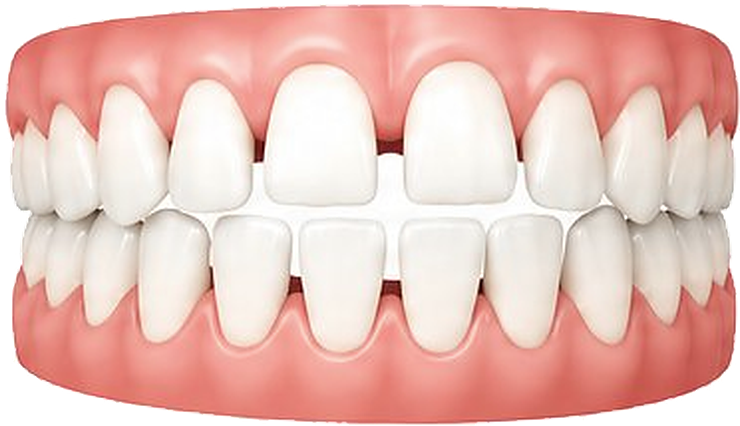
Gaps between teeth: closing spaces with Invisalign
What causes gaps, when they matter, and how aligners close them neatly.
Read the guide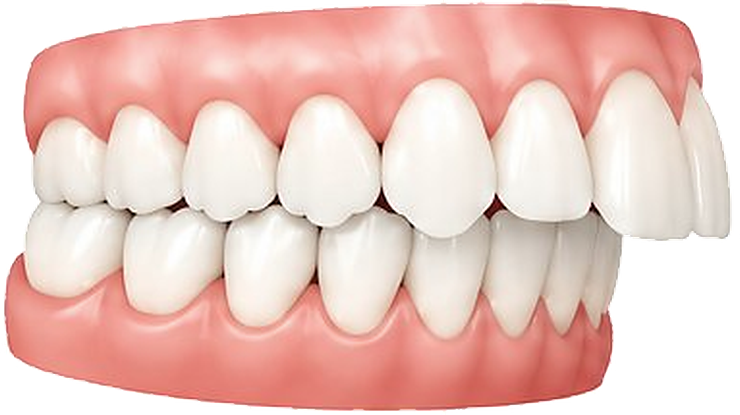 Conditions we treat · 7 min read
Overbite: what it is and how Invisalign corrects it
When the upper teeth close too far over the lower, and how aligners improve the bite.
Read the guide
Protruding front teeth (overjet): causes and how Invisalign helps
When the upper front teeth stick out ahead of the lower ones, what causes it, and how aligners bring them back.
Read the guideLook goodFeel greatSmile confidently
Ready to talk it through?
A relaxed consultation with Dr Louise Gidda, with a 3D preview of your smile on the day.
A £25 booking fee reserves your consultation. It is credited in full to your treatment if you go ahead, and is non-refundable if you do not.